
Burst pipe? Washing machine flooded the kitchen? Roof leak after a storm? The faster you start drying, the less long-term damage you will have to deal with — mould, swollen skirtings, lifting laminate, ruined plaster.
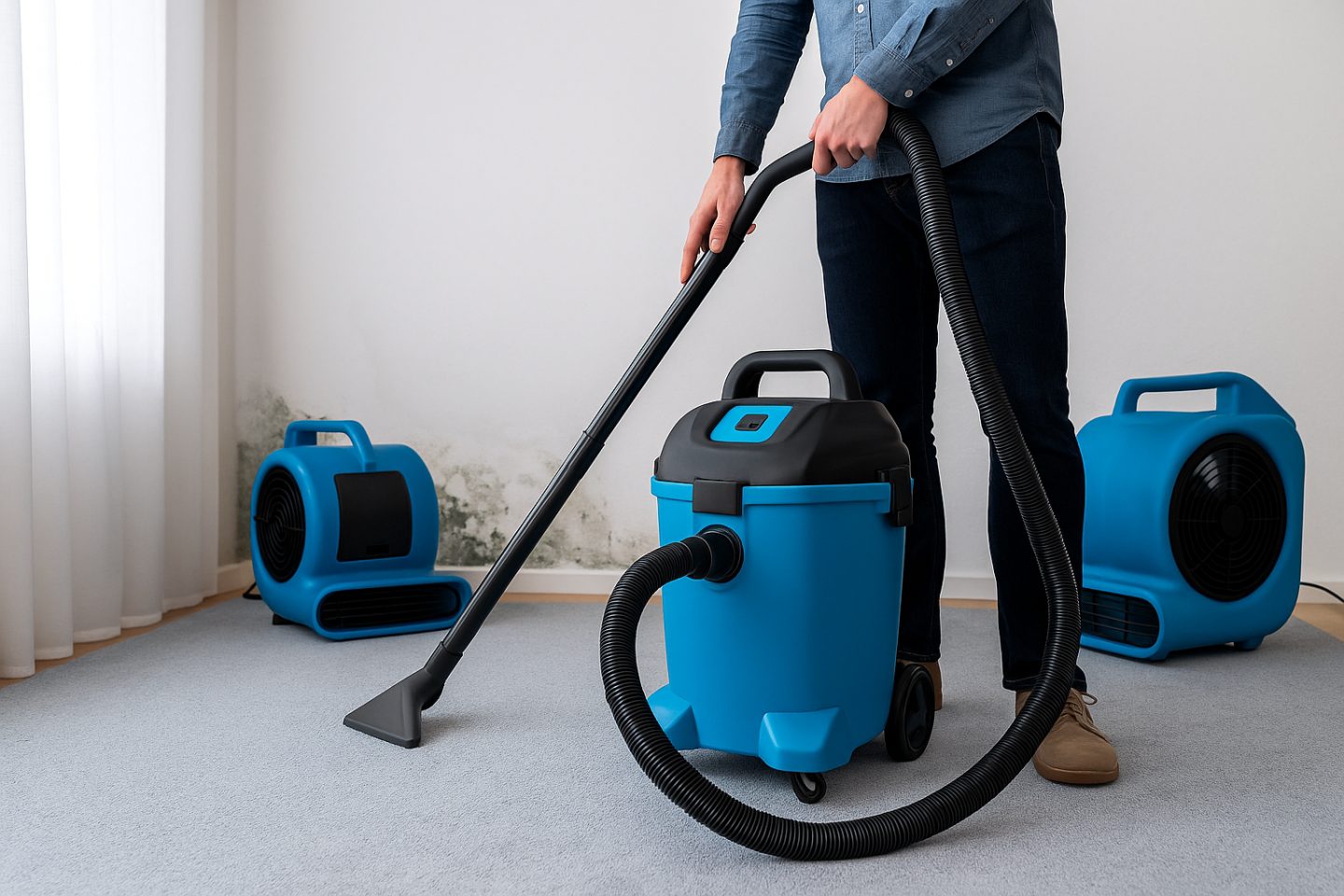
This page exists because most people calling us with a leak do not know what they need. They just know things are wet. So here is the short version.
What to do in the first 24 hours
- Stop the source — turn off water at the stop tap, isolate the appliance, get a roofer if it is a roof leak.
- Get the standing water out — towels, mops, or a wet vac for anything serious.
- Lift sodden carpet at the corners so air can get underneath. Pull off skirting if it is properly soaked — it will be easier to dry from behind.
- Open windows briefly to ventilate, then close them and start mechanical drying.
- Phone us and tell us roughly the room size and what is wet. We will tell you the kit you need and have it on the way.
The drying recipe
For a typical leak in a UK house, the kit list is short:
- Wet/dry vacuum to lift standing water from carpets, floors and crevices.
- Air mover (or two) to push air across wet surfaces — under and over carpets, against soaked walls, into cupboards.
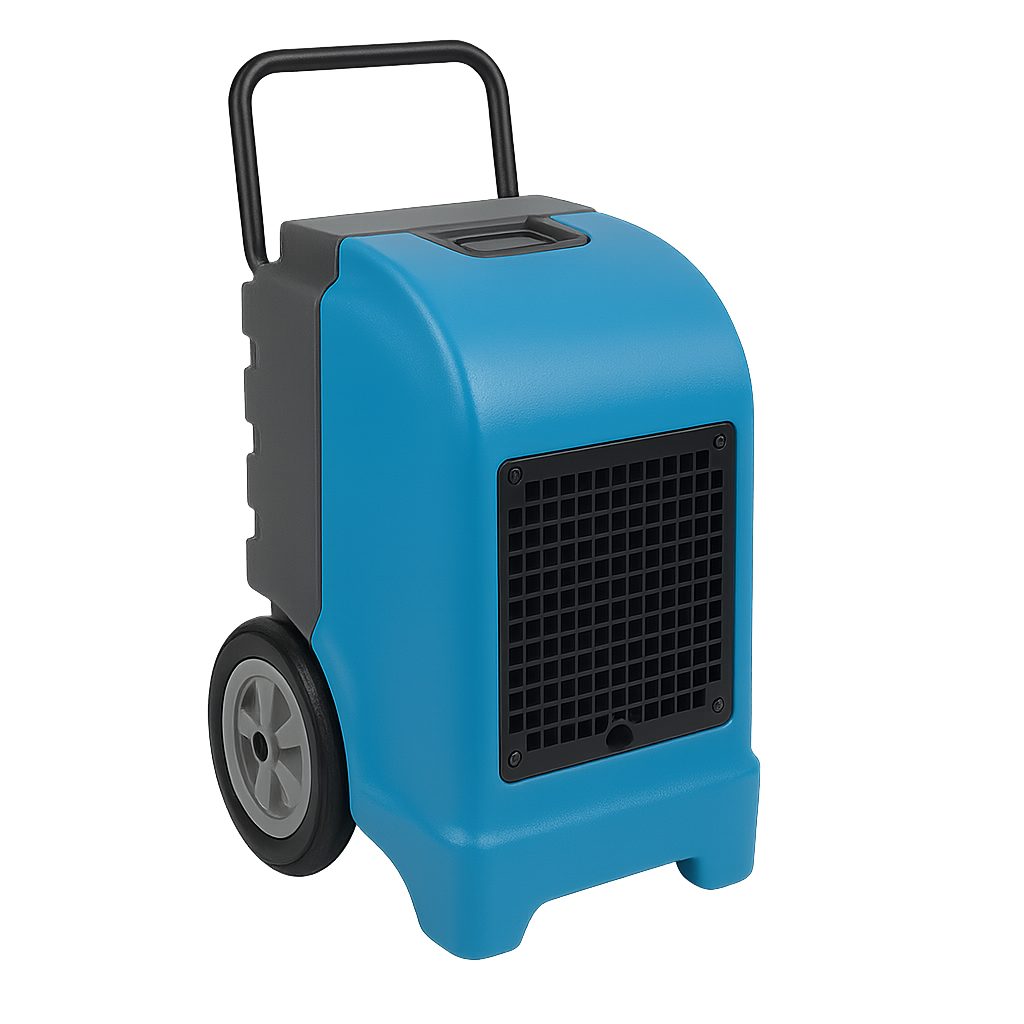
- Dehumidifier to pull the resulting evaporated moisture out of the air, around the clock.
- Heater if it is winter or the room is cold — drying happens much faster in warm air.
Run all of it for two to four days, depending on how soaked the structure is. Then leave the dehumidifier alone for another day or two as it pulls the last of the moisture out of plaster and wood.
Why a package, not just one machine
A dehumidifier on its own will dry the air slowly. An air mover on its own will move the moisture but not remove it. The two together — plus the wet vac to start — will dry a typical leak-affected room 3 to 5 times faster than any one of them alone.
Because most of our leak callouts use the same combination, we hire it as a package and give you a price for all three together rather than each separately.
Insurance jobs
If you are claiming on insurance, get the loss adjuster on the phone and tell them you are starting mitigation work. Insurers will usually pay for hire kit because it reduces their downstream payout — phone us, we will give you written rates for your claim.