
Heater Hire in Hull, Brough, Beverley & Scunthorpe
7 September 2025
Gutter Cleaner Hire East Yorkshire
23 October 2025Pet Urine Smell in Carpet
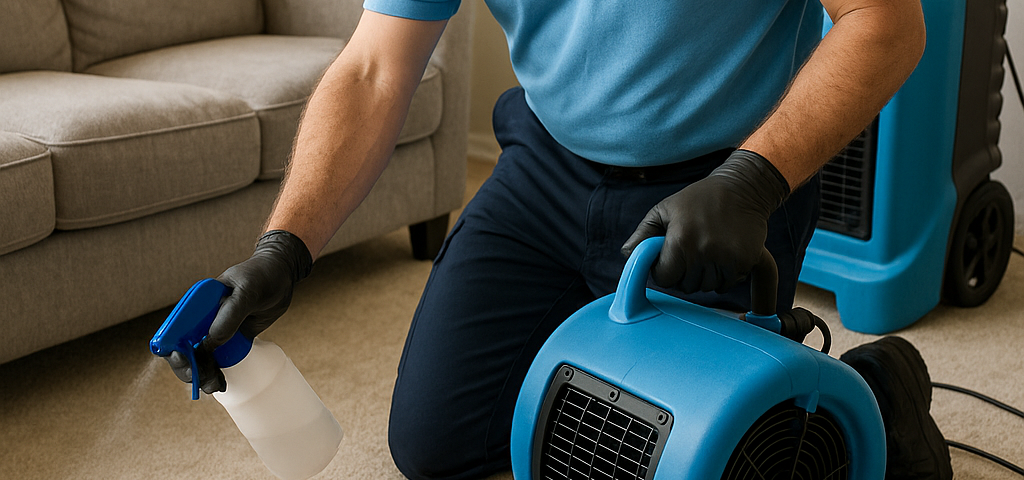

A homeowner contacted Aqua Venta about a damp, smell carpet after their dog had an accident near the lounge doorway. The odour lingered, the carpet felt slightly wet, and the room smelt musty. This case study shows how Aqua Venta neutralised the urine, removed the contamination, and dried the room fast using professional carpet driers and dehumidifiers.
At a glance:
- Problem: Dog urine caused dampness and persistent odour in the carpet and underlay.
- Risks: Bacteria growth, wicking of urine salts, recurring smells after DIY cleaning.
- Solution: Targeted spray → blot → rinse → remove → dry workflow, air neutralisation, and moisture-controlled drying.
- Result: Carpet and subfloor returned to a neutral odour; moisture normalised; room fresh again.
The Situation
A homeowner noticed a sharp ammonia-like smell around a high-traffic area. After a quick surface wipe with a household cleaner, the smell returned the next day and the carpet felt damp. This is common: urine crystals and salts can remain in the underlay and subfloor, reactivating odours whenever humidity rises.
Our Assessment
We began with a UV inspection to locate fluorescence typical of pet urine, then used a moisture meter to map dampness through the carpet and underlay. Findings:
- Localised contamination beyond the visible mark.
- Dampness in the underlay (not just the pile).
- Faint odour in the air space, especially when the room was closed up.
What Aqua Venta Did (Step-by-Step)
1) Targeted pre-treatment spray (surface & fibres)
We applied a professional enzyme/urine-neutralising spray to break down uric acid and organic residues. This targets both the smell and the source. We allowed proper dwell time so the chemistry could work.
2) Blotting & initial extraction
Using absorbent pads and a spot extractor, we blotted and lifted as much contamination as possible. Blotting prevents forcing liquids deeper into the underlay and helps reduce later wicking.
3) Controlled rinse & re-extract
We performed a light rinse with clean water (and a fibre-safe acidic rinse where needed) to rebalance pH and flush residues, then extracted again to leave the carpet as dry as possible.
4) Lifting and removing affected materials (as needed)
Because the moisture map showed contamination in the underlay, we carefully lifted a section of carpet, removed the affected underlay, and inspected the subfloor. Where staining was present, we treated the substrate with a microbial/odour-neutralising agent and, if required, sealed it with a specialist odour barrier primer.
5) Air & surface odour neutralisation
In addition to fibre treatment, we used a fine mist fog of a non-masking odour neutraliser to treat the room air and hard surfaces (skirting, door threshold). This tackles any airborne odour molecules so the space smells genuinely fresh, not perfumed.
6) Professional drying: carpet driers + dehumidifiers
To stop odours from reappearing and prevent mould, we set up Aqua Venta carpet driers (air movers) to move air across the carpet surface and positioned refrigerant/dehumidifiers to remove moisture from the air. We created a controlled drying chamber (doors/windows managed, targeted airflow) and monitored temperature and relative humidity until readings stabilised.
7) Refit & final verification
Once dry, we refitted the carpet with replacement underlay, groomed pile to restore texture, and performed a final odour check with the homeowner.
Outcome: No noticeable odour in the room or carpet, normalised moisture readings, and a happy homeowner (with a newly encouraged toilet routine for the dog!).
Why Professional Help Matters
DIY sprays and surface cleaning can help with fresh accidents, but they rarely reach underlay and subfloor contamination. That’s why Aqua Venta’s process is different: we target the source, remove contaminated material if needed, and professionally dry to stop odours from coming back.
What homeowners should avoid
- Over-wetting (pushes urine deeper, triggers wicking).
- Strong perfumes/bleach (can set odours or damage dyes).
- Steam-only on old urine marks (can fix residues into fibres).
Why Drying Matters (and why we use dehumidifiers)
Urine odours intensify when humidity rises. Even after surface cleaning, moisture trapped in underlay or subfloor can reactivate smells. Our combination of air movement (carpet driers) and dehumidification removes that moisture quickly and safely, helping prevent mould, bacteria growth, and recurring odours.
Aftercare & Prevention
- Blacklight check: A small UV torch can help spot any missed areas.
- Routine ventilation & dehumidification: Especially in cooler months or rooms that run damp.
- Pet training & enzyme spotter: Keep a pet-safe enzyme spray handy for any future accidents.
- Regular maintenance clean: Periodic professional cleaning keeps residues from building.
Who This Helps
- Homeowners & tenants with pets.
- Landlords/letting agents managing odours between tenancies.
- Holiday lets & small hotels aiming to protect reviews and maintain freshness.
Call Aqua Venta
If you’re dealing with a damp, smelly carpet (pet accidents, leaks, or mystery odours), Aqua Venta can help. We’ll assess, neutralise, remove contamination, and dry with Aqua Venta carpet driers and dehumidifiers—quickly and safely. Get in touch to book an assessment.
FAQs
Will the smell come back?
Not if the source is removed and the area is dried properly. We treat fibres, underlay, and subfloor, then dry and verify.
Is it safe for pets and children?
We use professional, pet-safe formulations and advise re-entry once products have dried.
Do you always have to lift the carpet?
No. For fresh, small spills, surface treatment may be enough. For set-in odours or damp underlay, lifting a section is usually best.
How long does drying take?
Depends on room size, materials, and humidity. With carpet driers and dehumidifiers, many rooms are dry within hours to a day.

