
Speeding Up Decorating in North Ferriby – Air Mover & Fan Hire
15 August 2025
Damp Room Drying & Mouldy
17 August 2025Short-Term Heater Hire
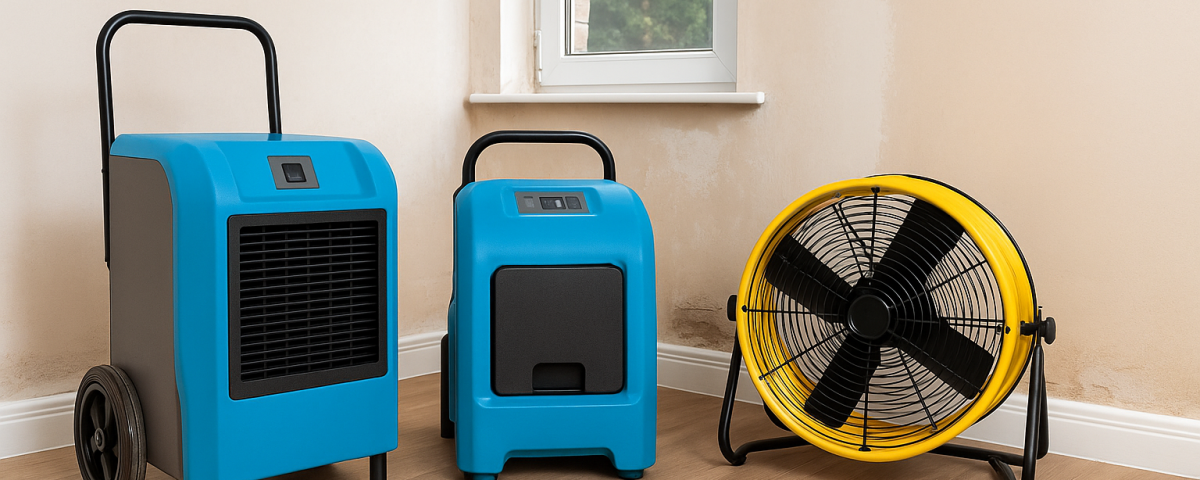
heater + dehumidifier + air mover
Emergency Delivery. We know it’s a Monday and 11:45 am but call us ANY time
When you’re facing a damp room after a leak, trying to keep trades moving on a renovation, or you’ve got a chilly venue for the weekend, short-term heater hire is a simple way to add warmth and speed up drying. This guide explains how we help homes and businesses across the West Hull Villages — Brough, Elloughton, South Cave (HU15), North Ferriby & Swanland (HU14), and Willerby, Anlaby & Kirk Ella (HU10).
Why heat helps drying
Drying is about evaporation and removing moisture from the air. Warm air holds more water vapour, so raising room temperature:
- speeds evaporation from wet surfaces (walls, plaster, floors, timber)
- lets a dehumidifier remove moisture more efficiently
- reduces the risk of mould and lingering odours
Best results come from a combo: heater + dehumidifier + airflow (an air mover/fan). Heat lifts moisture, airflow moves it off the surface, and the dehumidifier captures it.
When short-term heating makes sense
- After leaks or minor flooding – warm the room to aid dehumidification
- Renovation & decorating – accelerate drying of plaster, paint and screed
- Cold snaps & boiler issues – keep spaces usable while you wait for repairs
- Events & temporary spaces – halls, marquees, workshops and garages
Which heater type should I hire?
Different spaces and jobs suit different heater designs. Here’s a plain-English guide:
Electric fan heaters (2–9 kW)
- Where they shine: homes, offices, shops—fume-free, plug-in convenience
- Why choose: instant warm airflow, safe in enclosed spaces, simple controls
- Good for: rooms up to medium size, decorating & drying support
Infrared / radiant heaters
- Where they shine: garages, workshops, spot-heating people or surfaces
- Why choose: warms objects directly; less heat lost to air changes
- Good for: targeted warmth, plaster patches or workstations
Indirect oil/diesel space heaters (ductable, clean warm air)
- Where they shine: large rooms, halls, sites that need clean, dry air
- Why choose: heater stays outside; warm air is ducted in; no fumes in the space
- Good for: bigger drying jobs, venues, commercial areas
Direct-fired gas/diesel space heaters (ventilated areas only)
- Where they shine: very large, well-ventilated workshops or outdoors
- Why choose: high heat output at low running cost
- Note: these produce combustion by-products; ventilation is essential and they’re not suitable for sensitive indoor drying.
Not sure? Send us a quick video/room sizes on WhatsApp and we’ll recommend a safe, efficient option for your space in HU15/HU14/HU10.
Sizing: rough pointers (keep it practical)
Every building is different, but as a rule of thumb:
- Small/medium rooms (bedrooms, lounges, offices): start with a 3–5 kW electric fan heater; pair with a dehumidifier and an air mover for drying.
- Large rooms/venues: consider indirect diesel with ducting for clean warm air.
- Cold, leaky spaces (garages/outbuildings): infrared can be more efficient.
We’ll help you right-size on the phone—no calculators needed.
Short-term hire that fits real jobs
We offer day, weekend and weekly rates with same-day or next-day delivery across the West Hull Villages and Hull. Your hire includes:
- quick setup demo and a QR guide
- PAT-tested equipment and safety advice
- optional bundles with dehumidifiers and air movers for drying
Real-world example (HU15)
A family in Brough (HU15) had fresh plaster in a downstairs extension and a cold snap in the forecast. We delivered a 5 kW electric fan heater, a mid-range dehumidifier and a low-profile air mover. Running the trio for three days kept temperature around 20–22 °C, RH between 45–55%, and the space was ready for paint by the weekend.
Top tips for drying with heat
- Aim for 18–24 °C while drying — comfortable and effective.
- Close windows/doors during dehumidification; introduce brief ventilation only to purge odours or excess CO₂.
- Add airflow over wet surfaces (skirting, plaster, floors) with an air mover.
- Lift items off the floor and pull furniture away from walls.
- Use continuous drainage on dehumidifiers if possible (hose to a sink/drain).
- Check RH with a simple hygrometer; target 45–55% for steady progress.
- Safety first: keep clearances around heaters; never use direct-fired fuel heaters in unventilated indoor spaces.
FAQ: Heating for Drying & Short-Term Warmth
How long will it take to dry a typical room?
Most light leaks/patches: 2–5 days with heat, dehumidifier and airflow. Heavier floods and thick plaster take longer.
Do heaters alone dry a room?
They help, but you’ll dry much faster with a dehumidifier capturing the moisture and an air mover to shift it off surfaces.
Are electric heaters expensive to run?
They’re efficient for smaller rooms and short-term use. For large spaces, indirect diesel often works out cheaper per kWh of heat.
Can I use a heater in a closed room?
Electric and infrared are fine. Direct-fired gas/diesel require good ventilation and aren’t suitable for enclosed living areas.
Do you deliver to my village?
Yes — we cover HU15 (Brough, Elloughton, South Cave), HU14 (North Ferriby, Swanland), HU10 (Willerby, Anlaby, Kirk Ella) and wider Hull & East Yorkshire.
What to book (quick picks)
- Drying bundle: 3–5 kW electric heater + mid dehumidifier + air mover
- Venue/large room: Indirect diesel with ducting + optional dehumidifier
- Garage/workbench: Infrared heater + compact dehumidifier
Ready to hire? Book online with a small deposit or call for same-day delivery.


